Nairobi has a water problem, and most residents know it. Taps run dry for days at a time, water bills keep climbing, and reliable bowser service is now considered a luxury. That is why borehole drilling in Nairobi has become one of the fastest growing infrastructure investments in the capital.
If you are a homeowner in Karen, a school in Kileleshwa, a hotel in Westlands, an apartment block in Kilimani, or a factory in Embakasi, this guide is for you. We cover Nairobi’s specific geology, the permits you need, what to expect by neighbourhood, the process from start to finish, and how to avoid the mistakes that cause boreholes to fail.
Table of Contents
- Why Nairobi Is in the Middle of a Borehole Boom
- Nairobi’s Unique Hydrogeology
- Borehole Depths by Nairobi Neighbourhood
- The Borehole Drilling Process in Nairobi
- Permits You Need for a Nairobi Borehole
- Common Challenges Specific to Nairobi
- Choosing a Borehole Drilling Company in Nairobi
- Frequently Asked Questions
Why Nairobi Is in the Middle of a Borehole Boom
Nairobi’s population has more than doubled since 2000, but its water infrastructure has not kept up. The Nairobi City Water and Sewerage Company currently supplies roughly half the city’s actual daily demand. The shortfall is filled by bowsers, private storage, and increasingly, private boreholes.
According to the Kenya National Bureau of Statistics (KNBS) Economic Survey 2025, 47,199 boreholes were drilled in Kenya in 2024 to 2025. A significant share of these are in Nairobi metropolitan area. Most of them are privately funded by homeowners, schools, businesses, and real estate developers tired of waiting for piped supply that may never come.
What is driving the boom is not just supply unreliability. It is also climate, infrastructure age, and economics.
- Aging mains infrastructure. Most of Nairobi’s pipes were laid before 2000. Burst rates are rising and treated water loss is significant.
- Drought intensity. Climate change has made wet seasons less reliable, putting pressure on Ndakaini Dam and other water sources.
- Rising bowser costs. Tanker water has become a substantial recurring expense for many Nairobi households.
- Property value. A properly registered borehole now adds meaningful value to a Nairobi property, especially in affluent estates.
- Independence. Boreholes deliver 24/7 water with no rationing notices, no water trucks, and no surprise bills.
Thinking about a borehole for your Nairobi property?
Talk to a licensed Bonvic Drilling engineer today. 📞 Call +254 720 545 191 or 💬 WhatsApp us for a free site assessment.
Nairobi’s Unique Hydrogeology
Nairobi sits on layered volcanic geology that creates two distinct aquifer systems. Understanding the difference is essential before drilling.
The Upper Aquifer (50 to 150 metres)
This was Nairobi’s first borehole zone. Most boreholes drilled in the city between the 1960s and early 2000s tap this aquifer. It is relatively shallow, easier to reach, and historically delivered good water.
The problem? It is now heavily over extracted. Years of unregulated drilling have dropped water levels significantly, and many older Nairobi boreholes have either dried up or produce reduced yields. The upper aquifer is no longer a reliable target for new drilling in most parts of the city.
The Lower Aquifer (150 to 300 metres)
This deeper aquifer is where most new Nairobi boreholes are drilled today. It sits below a less permeable rock layer, which has protected it from over extraction. Yields are generally more consistent and water quality is typically better.
Drilling to this depth requires modern equipment, proper casing all the way down, and a hydrogeological survey to confirm the right spot. This is not DIY territory. For more on regional drilling depths, see our guide on the average water table in Kenya.
What This Means for You
If you are drilling a new borehole anywhere in Nairobi, expect to go deeper than older boreholes in your area. Plan for 150 to 300 metres in most cases. A few high ground neighbourhoods may need to go even deeper.
Borehole Depths by Nairobi Neighbourhood
Nairobi’s neighbourhoods sit at different elevations and on different geological formations. The table below gives indicative depth ranges based on our recent drilling experience across the city.
| Nairobi Area | Typical Depth | Notes |
|---|---|---|
| Karen, Langata, Hardy | 180 to 280 metres | Higher ground. Boreholes typically reach the lower aquifer. |
| Runda, Muthaiga, Kitisuru | 200 to 300 metres | Mature estates. Many existing boreholes are now competing. |
| Lavington, Kileleshwa, Kilimani | 180 to 280 metres | Densely built. Spacing rules apply strictly. |
| Westlands, Spring Valley, Loresho | 150 to 250 metres | Mixed terrain. Productive aquifers in most spots. |
| Garden Estate, Roysambu, Kasarani | 150 to 230 metres | Generally productive lower aquifer. |
| South B, South C, Nairobi West | 170 to 250 metres | Older boreholes often in the upper aquifer. New ones go deeper. |
| Embakasi, Donholm, Buruburu | 180 to 270 metres | Dense residential. Survey is critical to avoid spacing conflicts. |
| Ridgeways, Thigiri, Gigiri | 200 to 300 metres | High ground. Deeper drilling typical. |
These are indicative ranges only. The actual depth required at your exact site is confirmed by a proper hydrogeological survey before drilling begins.
The Borehole Drilling Process in Nairobi
The process is the same proven path that delivers boreholes which last decades. Every step matters. Skipping any of them is the single biggest reason Nairobi boreholes fail early.
Step 1: Free Site Assessment
A licensed drilling engineer visits your Nairobi property to understand your water needs, available space for the drill rig, power supply options, and existing structures. The output is a project brief.
Step 2: Hydrogeological Survey
A WRA licensed geologist performs Vertical Electrical Sounding (VES) and Electromagnetic (EM) profiling at your site. The survey identifies the right drilling location, expected depth, anticipated yield, and casing requirements.
This is mandatory for permit applications, and no reputable Nairobi contractor will drill without it.
Step 3: Permit Applications
We handle all three required permits on your behalf (WRA, NEMA, and Nairobi County). More details on Nairobi specific permits are covered in the next section.
Step 4: Mobilisation and Drilling
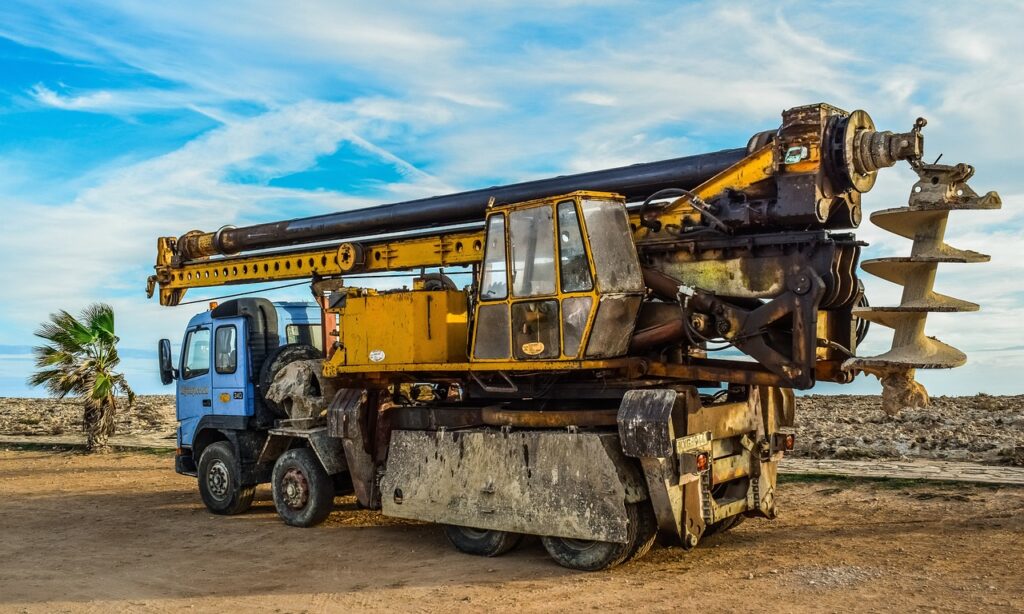
The drilling rig arrives at your site. Actual drilling for a Nairobi borehole typically takes 3 to 5 days, depending on depth and the geology hit at your specific location.
Step 5: Casing, Screening and Grouting
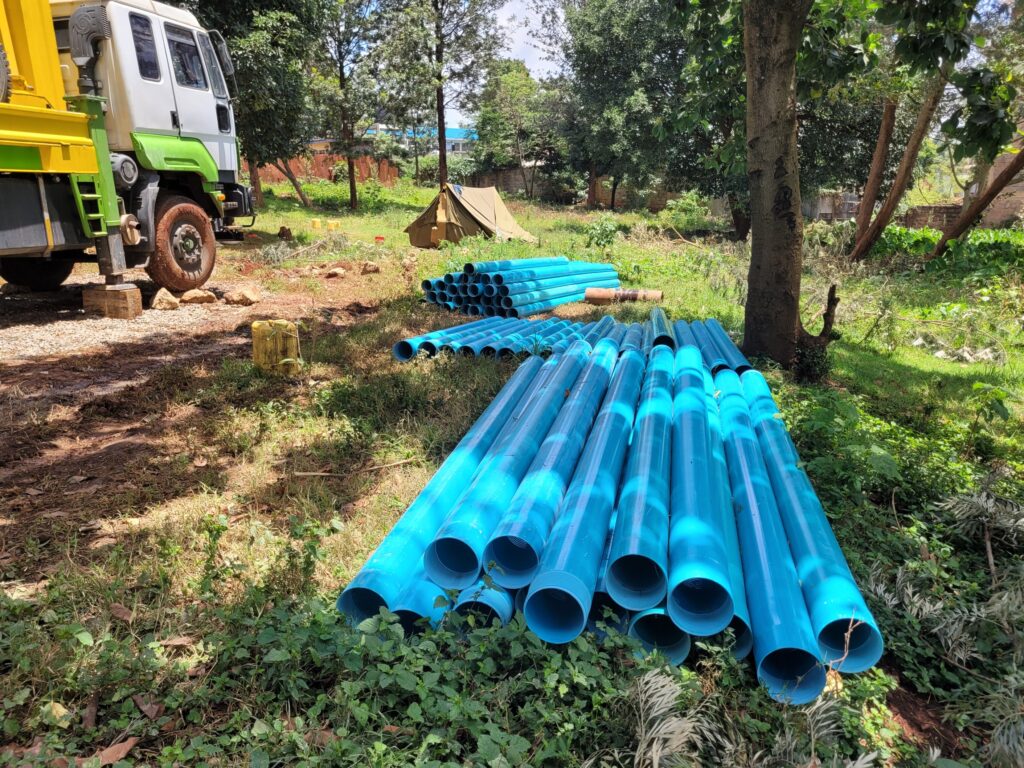
Steel or uPVC casing is installed to prevent collapse. Slotted screens go in at the productive zones. The annular space is filled with gravel pack and capped with bentonite grout to prevent contamination.
Cutting corners here is the single biggest cause of Nairobi borehole failure. Our guide on PVC vs steel casing in Kenya covers the choice in detail.
Step 6: Development and Test Pumping
The borehole is flushed, surged, and test pumped for 24 to 72 hours to confirm sustainable yield. This data sets the pump size and pumping schedule for the life of the borehole.
Step 7: Water Quality Testing
A sample goes to a certified laboratory for full analysis. Read our complete guide on borehole water quality testing in Kenya for the parameters every borehole owner should check.
Step 8: Pump Installation and Registration
The correct submersible pump is installed at the proper depth. The borehole is then registered with the WRA, and you receive a registration certificate, drilling log, hydrogeological report, water analysis certificate, and operation manual.
For the full step by step process across Kenya, read our complete 2026 borehole drilling guide.
Permits You Need for a Nairobi Borehole
Drilling a borehole without permits is illegal under Kenya’s Water Act 2016. In Nairobi, three approvals are required before drilling begins.
| Permit | Authority | Purpose |
|---|---|---|
| Authorisation to Drill | Water Resources Authority (WRA) | Confirms borehole spacing rules (minimum 100 metres from nearest existing borehole in Nairobi, 800 metres in some zones) |
| EIA Licence | National Environment Management Authority (NEMA) | Environmental impact assessment compliance |
| No Objection Letter | Nairobi City County | Confirms no conflict with existing water infrastructure |
Permits typically take 2 to 6 weeks. Without them, your borehole cannot be legally registered, insured, or properly valued for property purposes. The WRA actively decommissions unregistered boreholes.
Common Challenges Specific to Nairobi
Borehole Spacing in Dense Estates
In neighbourhoods like Kileleshwa, Lavington and parts of Karen, existing boreholes are everywhere. WRA spacing rules mean new drilling sites must respect minimum distances from neighbours’ boreholes. Our hydrogeological surveys map nearby boreholes and identify legal drilling positions on your plot.
Limited Drill Rig Access
Many Nairobi properties have narrow gates, tight compounds, or paved areas that complicate rig access. A 25 tonne drilling rig needs real space. We assess this during the site visit and plan logistics carefully before drilling day.
Noise and Neighbour Considerations
Drilling produces noise during working hours. In dense estates, we coordinate with property managers and neighbours to minimise disruption. Drilling is typically completed within 3 to 5 days, so the inconvenience is short term.
Existing Underground Services
Nairobi properties often have underground sewer lines, electrical cables, fibre optic, and old water pipes. We confirm the exact drilling position avoids these services before the rig sets up.
Power Supply for the Pump
Once drilled, your borehole needs a power source. Most Nairobi properties use mains electricity, but increasingly we install solar or hybrid solar plus grid systems for reliability and lower running costs.
Water Quality Variations
Some Nairobi boreholes show elevated levels of iron, manganese, or hardness depending on the aquifer. Proper water testing identifies any issues, and we design treatment systems where needed.
Need help navigating Nairobi’s borehole drilling rules?
We handle everything from survey to commissioning. 📞 Call +254 720 545 191 or 💬 WhatsApp us for a free site assessment.
Choosing a Borehole Drilling Company in Nairobi
The contractor you choose decides whether your Nairobi borehole lasts 30 years or fails in 30 months. Use this checklist.
- ✅ Licensed by the Water Resources Authority (WRA)
- ✅ Registered with the National Construction Authority (NCA) where applicable
- ✅ Works with WRA licensed hydrogeologists for surveys
- ✅ Provides a written, itemised quotation (survey, permits, drilling, casing, development, test pumping, water test, pump, commissioning)
- ✅ Can show you drilling logs and registration certificates from recent Nairobi projects
- ✅ Offers maintenance contracts after installation
- ✅ Has specific Nairobi drilling experience (deeper aquifers, dense estates, permit logistics)
- ✅ Provides written warranties
- ✅ Has insurance cover for the drilling crew and your property
- ✅ Provides complete documentation handover
Read our detailed piece on how to choose the best borehole drilling company in Nairobi for a deeper breakdown.
Frequently Asked Questions About Borehole Drilling in Nairobi
How deep do boreholes go in Nairobi?
Most new boreholes in Nairobi reach 150 to 300 metres because the upper aquifer is heavily over extracted. The exact depth at your property is confirmed by a hydrogeological survey before drilling.
How long does borehole drilling take in Nairobi?
From the first survey to commissioning, expect 4 to 10 weeks. Most of the time is spent on permits, which typically take 2 to 6 weeks. Actual drilling usually takes 3 to 5 days.
Do I need permits to drill a borehole in Nairobi?
Yes. You need three approvals before drilling: WRA authorisation, a NEMA EIA licence, and a Nairobi City County no objection letter. A reputable drilling company handles all three on your behalf.
Can I drill a borehole in a small Nairobi compound?
Often yes. A 25 tonne drilling rig needs real access, but our site assessment confirms what is possible at your specific location. Tight compounds may require additional planning but most Nairobi plots are workable.
Is borehole water in Nairobi safe to drink?
It depends on the borehole and the aquifer. Water from the lower aquifer is generally good quality, but every borehole needs proper laboratory testing for pH, bacteria, heavy metals, and chemical parameters. Treatment systems can address any issues identified.
How much does borehole drilling cost in Nairobi?
Cost depends on depth, casing, pump type, and equipment. Use our free borehole cost calculator for an instant estimate, or contact us for a precise quote based on your site.
Will a borehole increase my Nairobi property value?
Yes, especially in areas with chronic water supply issues. A properly registered, fully documented borehole adds meaningful value to most Nairobi properties.
Can I drill a borehole in an apartment block or shared compound?
Yes, with proper planning and consent from the body corporate or estate management. Apartment block boreholes typically need higher yield and larger storage to serve multiple units.
How long does a Nairobi borehole last?
A properly drilled, properly maintained borehole in Nairobi can deliver clean water for 30 to 50 years. Regular maintenance and occasional flushing keep it performing.
What happens if my Nairobi borehole runs dry?
Shallow boreholes drilled into the over extracted upper aquifer are most at risk. New deep boreholes drilled with proper hydrogeological surveys very rarely run dry. If yields drop on an existing borehole, our borehole flushing service can often restore performance.
Ready to Drill a Borehole in Nairobi?
Bonvic Drilling has completed boreholes across every Nairobi neighbourhood. We know the depths, the geology, the permits, and the contractors and surveyors who work in this city.
Every project starts the same way. A free site assessment at your property, an honest conversation about your water needs, and a clear plan from there.
Get your free Nairobi site assessment today
Speak to a licensed Bonvic Drilling engineer. No obligation, no pressure.
📞 Call +254 720 545 191 | 💬 WhatsApp Us
Or visit our contact page to send a message.
For more guidance, browse our full range of services, view our completed borehole projects, or read our complete 2026 borehole drilling guide.
Sources: Kenya National Bureau of Statistics (KNBS) Economic Survey 2025; Water Resources Authority (WRA); NEMA; Nairobi City Water and Sewerage Company.