Kajiado County is one of Kenya’s driest regions, yet it is also one of the fastest growing. From the booming residential estates of Kitengela, Ongata Rongai, Ngong and Kiserian, to the vast Maasai ranches stretching toward Namanga and Loitoktok, the demand for a reliable water supply has never been higher. That is why borehole drilling in Kajiado has become the most dependable long-term water solution for homeowners, schools, farms, factories and entire communities across the county.
But drilling a borehole in Kajiado is not the same as drilling one in Kiambu or Machakos. The county sits on complex geology, with black cotton soils overlying weathered Basement System rocks, volcanic intrusions from the Rift Valley, and aquifers that can lie anywhere between 80 and 250 metres below the surface. This guide covers everything you need to know before drilling, from Kajiado’s specific hydrogeology to permits, the drilling process, real project examples, and how to choose the right contractor.
Table of Contents
- Why Kajiado Needs Boreholes More Than Ever
- Kajiado’s Hydrogeology Explained
- Borehole Depths by Kajiado Sub-County
- Real Project Examples From Kajiado
- The Borehole Drilling Process in Kajiado
- Permits You Need in Kajiado
- Common Challenges Specific to Kajiado
- Choosing a Drilling Company in Kajiado
- Frequently Asked Questions
Why Kajiado Needs Boreholes More Than Ever
Kajiado is officially classified as part of Kenya’s Arid and Semi-Arid Lands (ASAL). Annual rainfall in most of the county averages just 500 to 800mm, and even that arrives in two short, unreliable seasons. According to the Kenya National Bureau of Statistics (KNBS), Kajiado is one of the counties with the lowest piped-water coverage in the country, leaving most residents to rely on alternative sources.
The pressure on water in Kajiado comes from four directions at once. Population in towns like Kitengela and Ongata Rongai has more than tripled since 2010. Climate variability has made rainy seasons shorter and less reliable. Surface water sources such as the Olkejuado River often run dry. And the cost of trucked water from bowsers has climbed sharply, becoming a recurring household expense that most families want to escape.
Where Kajiado Households Get Their Water
Based on field observations across Kajiado sub-counties
A properly drilled borehole eliminates these problems. Once commissioned, it can deliver between 1,500 and 30,000 litres per hour, depending on the aquifer. That is enough to supply a family, an apartment block, a school, a livestock herd, or a greenhouse operation. With proper maintenance, a borehole in Kajiado will reliably serve you for 25 to 40 years.
Thinking About a Borehole in Kajiado?
Talk to a licensed Bonvic Drilling engineer today. Free site assessment, no obligation.
Kajiado’s Hydrogeology Explained
Understanding what lies beneath your land is the single biggest factor in a successful borehole. Kajiado’s geology varies sharply by location, and getting it wrong is the most common reason boreholes fail or come up dry. Here is what you can expect across the county.
The Northern Belt (Ongata Rongai, Ngong, Kiserian)
This area sits on the eastern flank of the Ngong Hills, with volcanic phonolites and trachytes dominating the subsurface. Aquifers are typically found at 120 to 200 metres, with yields between 3 and 8 cubic metres per hour. Drilling here requires Down-the-Hole (DTH) hammer rigs capable of breaking through hard volcanic rock.
The Central Plains (Kitengela, Isinya, Kajiado Town)
This region is characterised by black cotton soils overlying weathered Basement System rocks. Hydrogeological surveys across the area consistently show aquifers at four distinct levels: 29 to 42 metres (shallow, often low-yielding), 48 to 61 metres (moderate yield), 85 to 94 metres (reliable, commonly targeted), and 100 to 140 metres (deep and high-yielding). Most successful boreholes here are drilled to 150 to 200 metres to access the deeper, more dependable aquifers.
The Rift Valley Edge (Magadi, Ewuaso, Mosiro)
The closer you go to Lake Magadi, the more you have to watch for salinity and elevated minerals. Some boreholes in this area hit excellent yields but produce water with high sodium, fluoride, or total dissolved solids (TDS) levels. According to World Health Organization (WHO) guidelines, fluoride levels above 1.5 mg/L are unsafe for drinking. Treatment systems are often required in this zone.
The Southern Highlands (Loitoktok, Rombo, Kimana)
The slopes around Mt. Kilimanjaro offer some of the best water prospects in Kajiado. Aquifers here are recharged by mountain runoff from Kilimanjaro’s glaciers and can be reached at 80 to 150 metres with excellent yields and generally good water quality.
Borehole Depths by Kajiado Sub-County
The table and chart below give indicative depth ranges based on field experience drilling across Kajiado County. Actual depth at your exact site is always confirmed by a hydrogeological survey before drilling begins.
Typical Borehole Depth Ranges Across Kajiado
Depth in metres. Bars show the typical range from minimum to maximum.
Scale: 0m on the left, 350m on the right.
Real Project Examples From Kajiado
These project profiles illustrate how borehole projects in different parts of Kajiado typically come together. Names and identifying details have been changed for privacy, but the technical details reflect real fieldwork from across the county.
🏡 Project 1: The Mwangi Family Home, Kitengela
The challenge: The Mwangi family had recently completed a four-bedroom home on a quarter-acre plot in Kitengela’s Acacia Estate. For nearly a year, they relied on bowser deliveries every five days, with prices fluctuating wildly during dry months. The unpredictability was disrupting daily life and their water budget was climbing month after month.
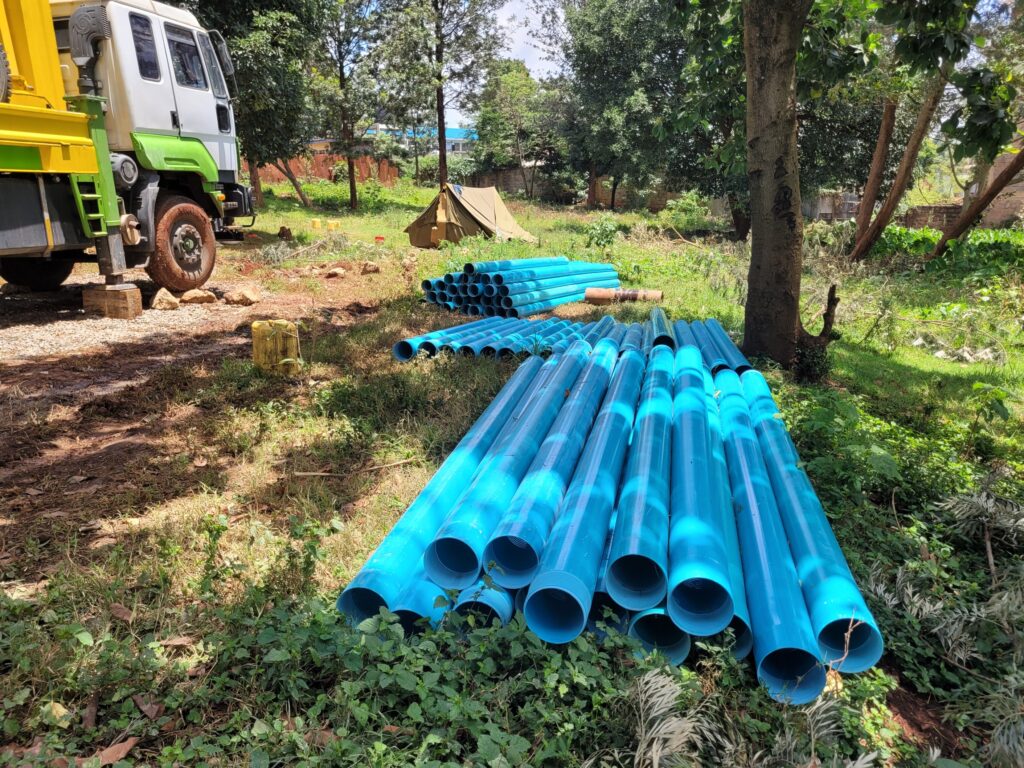
The solution: After a hydrogeological survey identified a strong aquifer at 165 metres, a 6-inch borehole was drilled to 180 metres. uPVC casing was installed throughout, with slotted screens placed at the two productive zones identified in the survey. A 2 HP submersible pump was matched to the test-pumping data.
The result: The borehole now delivers a sustainable yield of 4.2 cubic metres per hour, more than enough for the household and the small kitchen garden. The family has not bought bowser water in over 18 months.
🚜 Project 2: Sironka Mixed Farm, Loitoktok
The challenge: Mr. Sironka operates a 12-acre mixed farm near Loitoktok with two greenhouses growing tomatoes and capsicum, plus 40 head of dairy cattle. His existing shallow well had been drying up earlier each year, threatening both his crops and his herd.
The solution: The survey identified a Kilimanjaro-recharged aquifer at just 110 metres, which is typical of the southern highlands. A 130-metre borehole was drilled with steel surface casing and uPVC liner. Because grid power is unreliable in the area, a solar-powered submersible pumping system was installed alongside a 25,000-litre elevated storage tank.
The result: Yield tested at 6.8 cubic metres per hour, sustaining both greenhouses and the dairy operation through the dry season. The solar system has eliminated diesel costs entirely.
🏫 Project 3: Olosho-Oibor Primary School, Kajiado Central
The challenge: A primary school of 380 pupils had no on-site water. Teachers and senior pupils were spending hours each week fetching water from a distant communal point, and absenteeism spiked during dry months when the trek became unmanageable.
The solution: Working with a community-based donor, a 190-metre borehole was drilled targeting the deep Basement System aquifer common in central Kajiado. A 3 HP submersible pump and 10,000-litre tank were installed, with a community tap-stand serving neighbouring households outside school hours.
The result: Reliable water for the school, attendance has improved measurably, and the community now has dignified access to clean water within walking distance.
The Borehole Drilling Process in Kajiado
The borehole drilling process follows the same proven path that delivers boreholes which last decades. Every step matters. Skipping any of them is the most common reason boreholes fail prematurely.
Step 1: Free Site Assessment
A licensed engineer visits your Kajiado property to understand your water needs, available space for the drill rig, power supply options, and any existing structures or underground services. The output is a clear project brief.
Step 2: Hydrogeological Survey
A WRA-licensed geologist performs Vertical Electrical Sounding (VES) and electromagnetic profiling at your site. The survey identifies the right drilling point, expected depth, anticipated yield, and casing requirements. This step is mandatory for the permit application.
Step 3: Permit Applications
We handle all required permits on your behalf, including WRA authorisation, the NEMA Environmental Impact Assessment, and the Kajiado County no-objection letter.
Step 4: Mobilisation and Drilling
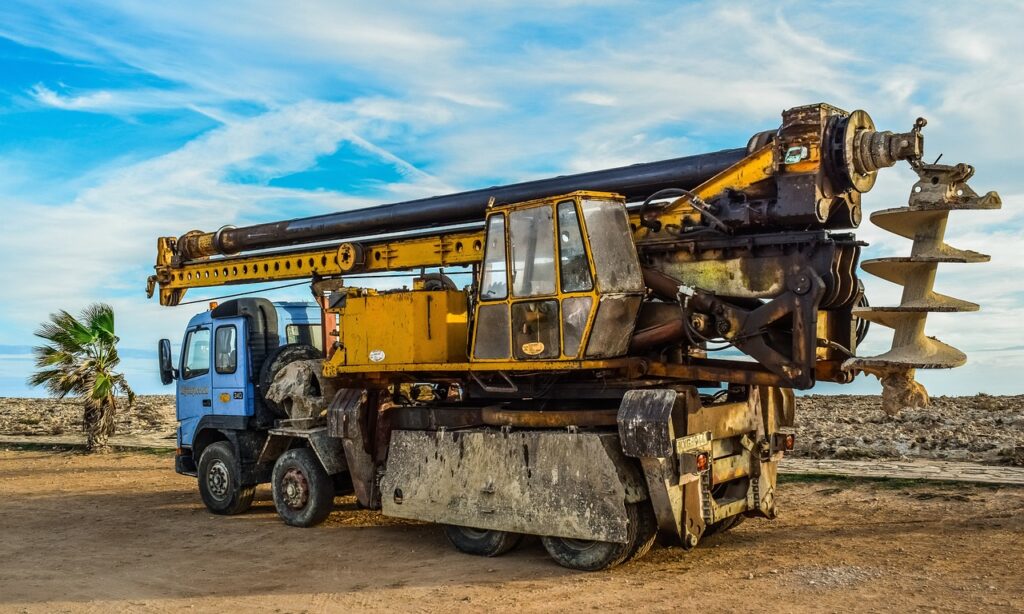
The drilling rig, support truck, and water bowser are mobilised to site. Actual drilling for a typical Kajiado borehole takes 3 to 5 days, depending on depth and the rock formations encountered.
Step 5: Casing, Screening and Grouting
Steel or uPVC casing is installed to prevent collapse. Slotted screens are positioned across productive zones. The annular space is filled with gravel pack and capped with bentonite grout to prevent surface water contamination. Cutting corners here is the single biggest cause of premature borehole failure.
Step 6: Development and Test Pumping
The borehole is flushed, surged, and test-pumped for 24 to 72 hours to confirm sustainable yield. This data sets the correct pump size and pumping schedule for the life of the borehole.
Step 7: Water Quality Testing
A water sample is sent to a certified laboratory for full analysis, including pH, total dissolved solids, fluoride, salinity, hardness, bacteriological content, and heavy metals.
Step 8: Pump Installation and Registration
The correct submersible pump is installed at the proper depth. The borehole is then registered with the WRA, and you receive a registration certificate, drilling log, hydrogeological report, water analysis certificate, and operation manual.
Permits You Need in Kajiado
Drilling a borehole without permits is illegal under Kenya’s Water Act 2016. In Kajiado, three approvals are required before drilling begins.
| Permit | Authority | Purpose |
|---|---|---|
| Authorisation to Drill | Water Resources Authority (WRA) | Confirms borehole spacing rules and abstraction limits |
| EIA Licence | National Environment Management Authority (NEMA) | Environmental impact assessment compliance |
| No Objection Letter | Kajiado County Government | Confirms no conflict with existing county water infrastructure |
Permits typically take 2 to 6 weeks. Without them, your borehole cannot be legally registered, insured, or properly valued for property purposes. The WRA actively decommissions unregistered boreholes across Kenya.
Common Challenges Specific to Kajiado
Kajiado’s geology and geography create a specific set of drilling challenges that experienced contractors plan for from the start. The chart below shows how often each issue appears in Kajiado projects, based on field observations.
Frequency of Drilling Challenges in Kajiado
Percentage of Kajiado projects that encounter each challenge
Black Cotton Soil Collapse
The top 5 to 15 metres of most Kajiado sites is unstable black cotton soil that swells when wet and collapses easily into the borehole. We address this by installing temporary steel surface casing immediately to stabilise the hole during drilling.
Hard Volcanic Rock
Around Ngong, Kiserian, and parts of Kajiado Central, drillers regularly hit dense phonolite and basalt that can slow progress to a crawl. We use DTH hammer rigs with tungsten-carbide bits designed for hard formations.
Salinity and Fluoride
Boreholes near Magadi, parts of Isinya, and along the Rift Valley edge can produce water with high TDS, salinity, or fluoride. Every borehole is tested at a certified laboratory, and we recommend appropriate treatment such as reverse osmosis or defluoridation filters where needed.
Remote Site Access and Power Supply
For sites in Loitoktok, Magadi, or deep Maasai land, mobilising heavy rigs over dirt tracks requires careful logistical planning. Many parts of Kajiado also have unreliable or no grid power, which is why we design solar-powered borehole pumping systems that eliminate diesel costs and improve reliability.
Ready to Plan Your Kajiado Borehole?
From Kitengela to Loitoktok, Bonvic Drilling has the experience and equipment for any Kajiado project.
Choosing a Drilling Company in Kajiado
The contractor you choose decides whether your borehole lasts 30 years or fails in 30 months. Use this checklist before signing any contract.
- ✅ Licensed by the Water Resources Authority (WRA)
- ✅ Works with WRA-licensed hydrogeologists for surveys
- ✅ Provides a written, itemised quotation covering survey, permits, drilling, casing, development, test pumping, water testing, pump, and commissioning
- ✅ Can show you drilling logs and registration certificates from recent Kajiado projects
- ✅ Has specific Kajiado drilling experience across the hard rock, plains, and Rift Valley zones
- ✅ Offers maintenance contracts after installation
- ✅ Provides written warranties on workmanship
- ✅ Has insurance cover for the drilling crew and your property
- ✅ Provides complete documentation handover
Frequently Asked Questions About Borehole Drilling in Kajiado
How deep are boreholes in Kajiado?
Most successful boreholes in Kajiado are drilled to between 150 and 250 metres, depending on the location. Shallow aquifers exist between 30 and 60 metres in some areas, but the most reliable water is usually found between 100 and 200 metres.
How long does it take to drill a borehole in Kajiado?
The drilling itself takes 3 to 5 days. The full project, including survey, permits, drilling, casing, test pumping, and equipping, typically takes 4 to 8 weeks.
Is the water from Kajiado boreholes safe to drink?
Most boreholes in Kajiado produce water that is safe after basic treatment such as filtration and chlorination. In some areas near Magadi and parts of the Rift Valley, water may contain elevated fluoride, salinity, or TDS. Every borehole is tested at a certified laboratory and treatment is recommended where needed.
Can I drill a borehole on a small plot in Kitengela or Ongata Rongai?
Yes, boreholes can be drilled on plots as small as an eighth of an acre. However, WRA spacing rules require a minimum distance from septic tanks and other boreholes, which is confirmed during the survey.
Do I need permission from neighbours to drill?
Not legally, but it is good practice to inform neighbours. The WRA reviews potential impact on existing nearby boreholes as part of the permit process.
How long will my borehole last?
A properly drilled, properly cased, and properly maintained borehole in Kajiado will reliably produce water for 25 to 40 years. The submersible pump typically needs replacement every 7 to 12 years.
Can a borehole in Kajiado run dry?
Over-pumping, prolonged drought, or aquifer depletion can reduce yields. This is why proper test pumping is critical, it tells you the borehole’s true sustainable yield and prevents installation of an oversized pump that will damage the aquifer.
Do you drill boreholes in remote parts of Kajiado such as Magadi or Loitoktok?
Yes. We have completed projects in every sub-county of Kajiado, including the most remote areas. Our rigs are mobilised carefully and we plan logistics around site access conditions.
Ready to Drill Your Borehole in Kajiado?
Bonvic Drilling has completed boreholes across every sub-county of Kajiado, from Kitengela and Ongata Rongai to Loitoktok, Magadi, and Namanga. We understand the geology, the permits, and the practical challenges of working in this county.
Every project starts the same way. A free site assessment at your property, an honest conversation about your water needs, and a clear plan from there.
Get Your Free Kajiado Site Assessment Today
Speak to a licensed Bonvic Drilling engineer. No obligation, no pressure.
Sources: Kenya National Bureau of Statistics (KNBS); Water Resources Authority (WRA); National Environment Management Authority (NEMA); World Health Organization (WHO); Kajiado County Government.