
Quick answer: from your first call to running water, a borehole in Kenya usually takes 4 to 10 weeks. Most of that time is spent waiting for permits, which take about a month. The drilling itself is quick: a typical domestic borehole takes about three days on site, and rarely more than five.
Below is the full timeline, stage by stage, so you can plan your project, your budget and your water needs around it.
Borehole Timeline at a Glance
| Stage | Typical time | What happens |
|---|---|---|
| Enquiry | Same day | You send your location and we tell you the expected depth and a cost range |
| Hydrogeological survey | 1 day on site | Readings are taken and the drilling point is marked, followed by the signed report |
| Permits | About 1 month | WRA, NEMA and county approvals |
| Mobilisation | Depends on distance | The rig and crew travel to site after the deposit |
| Drilling, casing and gravel pack | About 3 days | Usually no more than 5 days for a domestic borehole |
| Development and test pumping | 1 to 3 days | Flushing until the water clears, then a 24 to 72 hour test |
| Water analysis, pump and solar | After test results | Pump sized to the tested yield, then installed and commissioned |
Stage 1: Enquiry and First Estimate
Send your location, the town and county, on WhatsApp. From records of nearby boreholes and the local geology we can give you an expected depth and a cost range on the same day. That tells you early whether the project fits your budget. For the full cost picture, see borehole drilling cost in Kenya.
Stage 2: Hydrogeological Survey (1 Day on Site)
The survey team spends a day on your land, takes geophysical readings along survey lines and marks the best drilling point. The signed report follows once the data has been interpreted. You need it for your permit application, so this is the first real step. Read more about our hydrogeological survey.
Stage 3: Permits (About One Month)
This is the longest stage. You need authorisation from the Water Resources Authority and environmental approval from NEMA, plus county approval, before drilling can start under the Water Act 2016. We handle the paperwork, and approvals take about a month. The full process is explained in do you need permits to drill a borehole in Kenya.
Stage 4: Mobilisation
Once permits are in and the deposit is paid, the rig and support truck travel to site. The time depends on distance and access. A drilling rig is a large, heavy truck, so the route and the drilling point need firm ground and enough space to set up.
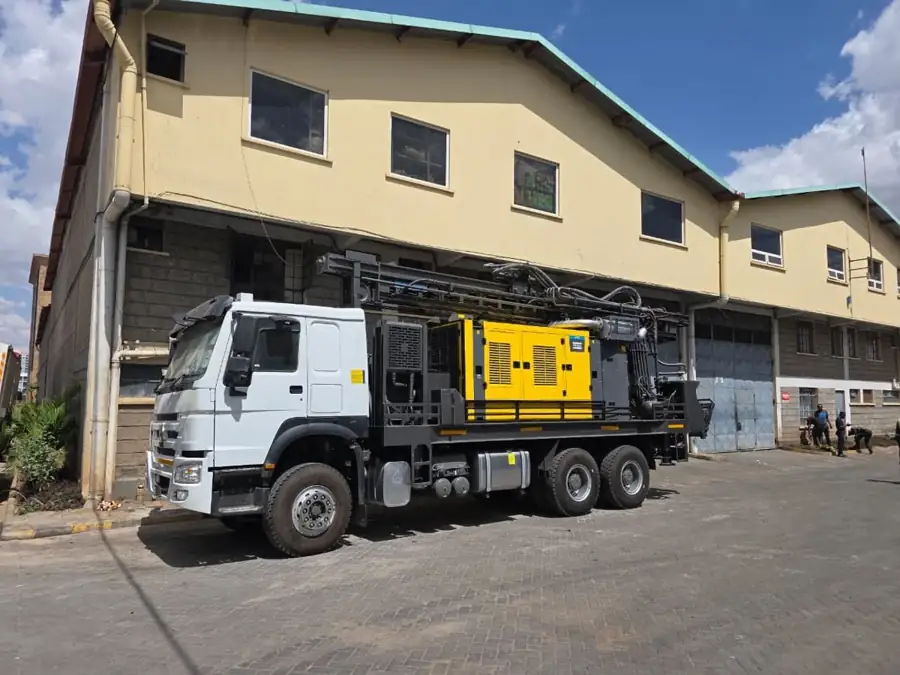
Stage 5: Drilling (About 3 Days)
For a typical domestic borehole, drilling takes about three days on site and rarely more than five. Deeper boreholes, very hard rock and mud rotary sites at the coast can take longer. As the rig goes down, the crew records the rock and notes each water strike.
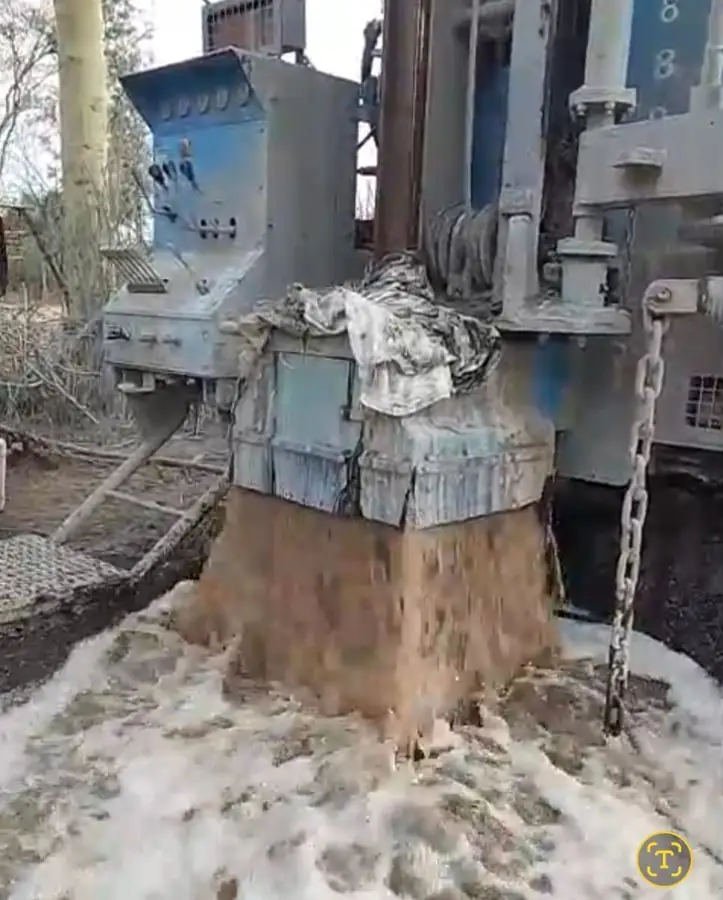
The casing and screens go in as soon as the hole reaches its final depth, followed by the gravel pack around the screens.
Stage 6: Development and Test Pumping (1 to 3 Days)
New borehole water is usually muddy at first. The borehole is flushed until the water runs clear; see how long it takes for borehole water to clear. Then a 24 to 72 hour test measures how much water the borehole can safely give. This is what your pump is sized from. See our test pumping services.
Stage 7: Water Analysis, Pump and Solar
A water sample goes to the lab for chemical analysis, so you know whether the water is safe to drink or needs treatment. The World Health Organization explains why testing drinking water matters. With the test pumping results, the pump and solar system are sized and installed, and you have running water.
If you are adding a water tower, plan for the foundation to cure before it carries a full tank. On a community project we have scheduled in Homa Bay County, drilling, the water kiosk and the tower are planned for 10 to 15 days on site, with the tower foundation given 30 days to cure before full use. Read why your borehole needs a water tower.
What Slows a Borehole Project Down
- Incomplete permit paperwork. Missing land documents are the most common delay.
- Rain and access. Muddy roads can stop a heavy rig reaching site. Check the Kenya Meteorological Department forecast when planning.
- Deep or difficult ground. Very hard rock or collapsing formations take longer to drill.
- Payment gaps. Work moves in stages tied to payments, so a delayed instalment pauses the job.
How to Get Water Sooner
- Book the survey as soon as you are serious, because permits cannot start without the report.
- Have your land ownership documents ready for the permit application.
- Clear a firm, level path and working area for the rig.
- Agree your payment plan before mobilisation. See how to pay for a borehole in Kenya.
- Decide on storage, a tank or a tower, early so it is ready when the pump goes in.
Frequently Asked Questions
How long does it take to drill a borehole in Kenya?
The drilling itself takes about three days on site for a typical domestic borehole and rarely more than five. The whole project, including survey and permits, usually takes 4 to 10 weeks.
How long do borehole permits take?
About one month for the WRA, NEMA and county approvals.
Can drilling start before the permits are approved?
No. Under the Water Act 2016 you need authorisation before drilling a borehole.
How long does test pumping take?
Usually 24 to 72 hours, after the borehole has been flushed clear.
When can I start using the water?
Once the borehole has been developed, test pumped and the pump installed. For drinking, wait for the water quality analysis results.
WhatsApp your location (town and county) to 0727 666 444 and we will tell you the expected depth, a cost range and the earliest survey date for your area.