A borehole is not a one time purchase. Like a car, it runs for years if you check it often and service it on time.
This checklist shows what to do every week, month and year, and when to call a contractor. Use the plan builder to get a schedule for your own pump.
- Most borehole problems show up first as a slow drop in output. Read your water meter every month.
- Test the water and chlorinate once a year. Flush the borehole every 3 to 5 years, or every 2 to 3 years with heavy use.
- Weekly and monthly checks take minutes and you can do them yourself. Flushing and pump work need a contractor.
Build Your Borehole Maintenance Plan
Your borehole maintenance plan
Pick your pump and how the water is used. You get a schedule you can screenshot and keep near the pump house.
A general guide from Bonvic field practice. Your water test results and pump manual come first.
Why Borehole Maintenance Matters
Over time, fine silt settles in the bottom of the borehole and minerals build up on the screens. The borehole gives less water, and the pump works harder to lift it.
Small problems caught early are cheap to fix. A pump that burns out after months of strain, or a borehole that needs full rehabilitation, costs far more.
Weekly Checks (5 Minutes)
- Look at the water. Fill a clear glass. Note any colour, smell or sand.
- Listen to the pump. A new noise, or a pump that starts and stops every few seconds, needs attention.
- Solar systems: wipe dust off the panels with clean water.
Monthly Checks (15 Minutes)
- Read the water meter and write the number down. Compare month to month.
- Check the storage tank level and the float switch.
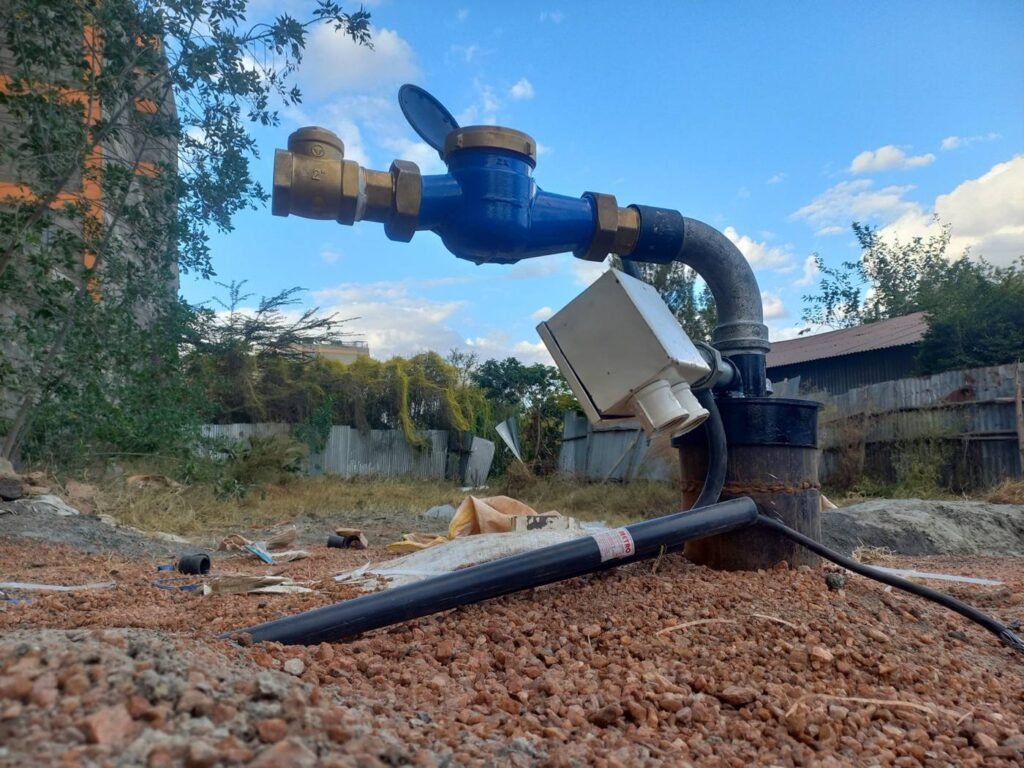
- Check the wellhead. The cap should be sealed and the slab clean, with no pooled water around it.
- Check the control panel for error lights, burnt smells or loose wires.
Keep a simple log book in the pump house. When something goes wrong, those numbers tell the technician what changed and when.
Every 3 Months
- Clean the storage tank and check the lid fits tightly.
- Check pipes, valves and taps for leaks.
- Check solar panel frame bolts and cable joints after windy or rainy months.
Yearly Service
- Water test at a certified lab: bacteria, iron, fluoride and salinity at minimum. See borehole water testing labs and prices.
- Chlorinate the borehole and tank to control bacteria.
- Pump check: a technician measures current, pressure and output and compares them with the last visit.
Flushing and Deep Cleaning (Every 3 to 5 Years)
Flushing blows silt and sand out of the borehole with compressed air. It is the single best way to keep yield up as the borehole ages.
Farms, schools, hospitals and water businesses pump more water, so they need flushing every two to three years. Read signs your borehole needs flushing and borehole flushing in Kenya.
A CCTV camera inspection at the same visit shows the casing and screens from the inside. If the borehole is older or output has dropped a lot, see borehole repair and rehabilitation.
Solar Pump Care
- Clean panels every week or two in dusty seasons. Dirty panels can cut output noticeably.
- Keep trees trimmed so no shade falls on the panels during the day.
- Check the controller display monthly and note any fault codes.
- Make sure the dry run sensor or float switch works, so the pump stops before the borehole runs low.
More in our guide to solar borehole pump installation.
Warning Signs You Should Not Ignore
| Sign | What it can mean | What to do |
|---|---|---|
| Output dropping month by month | Silt build up or a falling water level | Flush and check the water level |
| Sand or mud in the water | Damaged casing or screen | Stop pumping hard, call for a camera inspection |
| Pump starts and stops often | Pressure tank or float switch problem | Check the tank and switch |
| Brown or smelly water | Iron, bacteria or contamination | Lab test, then chlorinate |
| Power bill rising | Pump straining or worn | Pump check by a technician |
Not sure what is wrong? Try our borehole problem diagnoser or read common borehole problems and fixes.
Book a borehole service visit
Bonvic services boreholes across Kenya: flushing, pump checks, CCTV inspection and water testing. Send us your location, depth and pump type.
WhatsApp 0727 666 444Call 0797 000 555Frequently Asked Questions
How often should a borehole be maintained?
Do quick checks every week and month, clean the tank every three months, test the water and chlorinate every year, and flush the borehole every three to five years. Heavy use boreholes on farms, schools and water businesses need flushing every two to three years.
How much does borehole maintenance cost in Kenya?
Weekly and monthly checks cost nothing but your time. Flushing, pump servicing and camera inspections are priced per site, so WhatsApp Bonvic your borehole depth, pump type and location on 0727 666 444 for a quote.
What are the signs a borehole needs maintenance?
Falling output, dirty or smelly water, sand in the water, a pump that starts and stops often, rising power bills and a pump that runs but gives little water.
How do I clean a borehole?
Borehole cleaning is done by flushing with compressed air to lift out silt and sand, then chlorinating. It needs a rig or a compressor and should be done by a borehole contractor.
How long does a borehole last with good maintenance?
A well built and well maintained borehole can serve for decades. The pump usually needs servicing or replacing long before the borehole itself.
Who should maintain my borehole?
You can do the weekly, monthly and three monthly checks yourself. Flushing, pump work, camera inspection and rehabilitation need a borehole contractor like Bonvic.
Based on Bonvic Drilling field practice since 2010. Water quality limits follow the WHO drinking water guidelines.