Quick answer: borehole testing in Kenya means two things. Test pumping (a pump test) measures how much water the borehole can give safely, usually over 24 to 72 hours. A water quality analysis shows whether the water is safe, with WRA lab fees of KES 2,000 for bacteria and KES 5,000 for a full chemical analysis. With Bonvic, both are included in the drilling rate of KES 6,500 to 7,200 per metre.
A borehole is only as good as the water it gives and how long it keeps giving it. Testing is how you find out, before you buy a pump, before you drink the water and before you buy a property that depends on it.
This guide explains each borehole test, when you need it, what it costs and what a good report should show. Use the selector to see which tests fit your situation.
Which borehole test do you need?
Which borehole test do you need?
Pick your situation. We show the tests that answer your question and what to ask for.
The main borehole tests
| Test | What it tells you | When it is done |
|---|---|---|
| Hydrogeological survey | Where to drill and the likely depth. It comes before drilling. | Before drilling |
| Test pumping (pump test) | Safe yield, drawdown and recovery | After drilling, and when yield drops |
| Water quality analysis | Bacteria, minerals, salinity and pH | After drilling, then every year |
| Water level check | Rest and pumping water levels | Any time yield or pressure changes |
People often say borehole testing when they mean only one of these. Ask your driller exactly which tests are in the quote, and get each result in writing.
Test pumping: how much water can the borehole give?
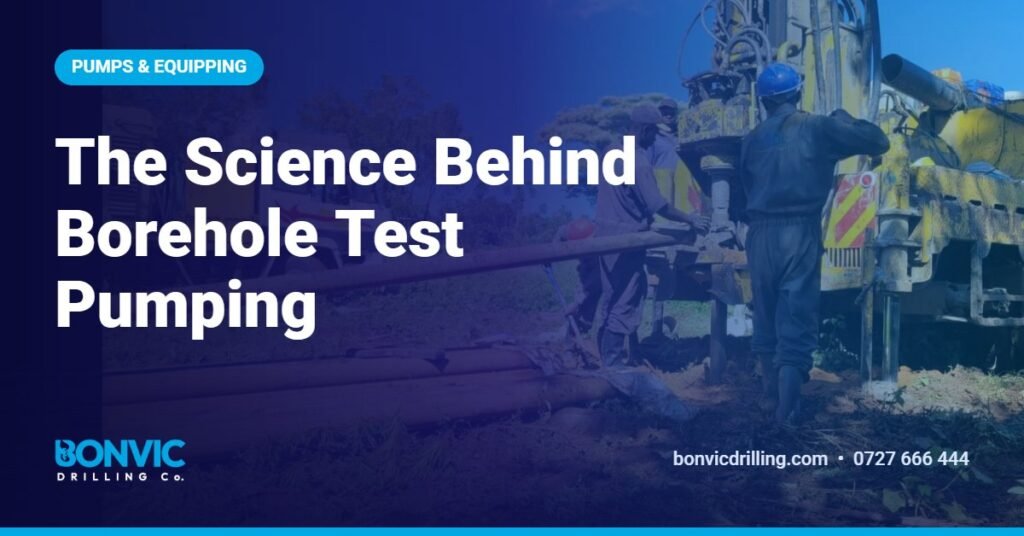
Test pumping means pumping the new borehole for hours or days while measuring how far the water level drops and how fast it recovers. The result is the safe yield: how much you can pump without running the borehole dry.
- Step drawdown test: the pumping rate is raised in steps to see how the borehole responds.
- Constant rate test: water is pumped at a steady rate, usually for 24 to 72 hours.
- Recovery test: the water level is measured as it rises after pumping stops. Fast recovery means a strong borehole.
Our full guide to borehole test pumping explains the science, and our test pumping service page shows how we run it.

Water quality testing: is the water safe?
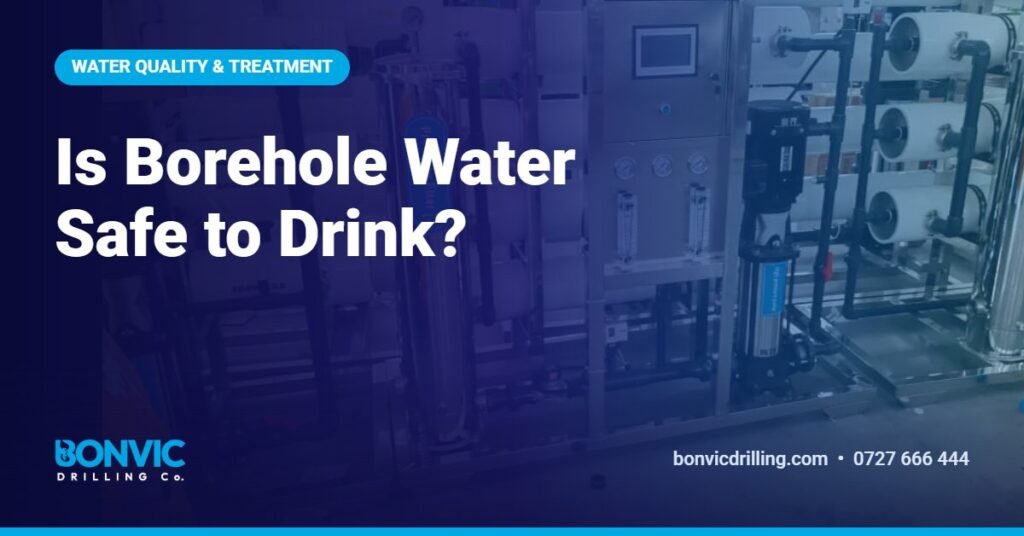
Clear water can still carry bacteria, fluoride, nitrate or salt. Only a laboratory test can tell you, and what you test depends on how you will use the water.
| Use | Minimum tests |
|---|---|
| Drinking and cooking | Bacteriological plus full chemical analysis |
| Livestock | Chemical, especially salinity and nitrate |
| Irrigation | Salinity (TDS or conductivity), sodium and pH |
| Washing and building | Basic chemical, such as hardness and iron |
See the 7 essential borehole water tests for each parameter, and borehole water testing labs and prices for where to take a sample.
How much does borehole testing cost in Kenya?
| Test | Typical price | Source |
|---|---|---|
| Bacteriological analysis, WRA lab | KES 2,000 | WRA |
| Full chemical analysis, WRA lab | KES 5,000 | WRA |
| Basic private lab test | KES 5,000 to 8,000 | IGSL, 2025 |
| Comprehensive private lab test | KES 10,000 to 20,000 | IGSL, 2025 |
| Advanced, including heavy metals | KES 20,000 to 40,000 or more | IGSL, 2025 |
Lab figures come from our water testing labs guide, where each source is linked. Prices change, so call the lab before you go.
For a new borehole, the Bonvic drilling rate of KES 6,500 to 7,200 per metre already includes test pumping and a water quality analysis. Testing an existing borehole is quoted after we see the site, so send your location on WhatsApp.
BLACK NOVEMBER 2026 OFFER
Hydrogeological survey KES 40,000. Drilling KES 6,500 per metre with PVC casing or KES 6,700 per metre with steel casing, for jobs booked by 30 November 2026.
See the offer and estimate your total or call 0727 666 444.
What a good borehole test report shows
- Rest water level before pumping, in metres below ground.
- Pumping rate for each step and the constant rate test.
- Drawdown, how far the water level fell while pumping.
- Recovery, how quickly the level came back after the pump stopped.
- Safe yield and a recommended pump setting depth.
- Lab results for each parameter, next to the KEBS and WHO limits.
Keep the report safe. It sizes your pump today, and it is the baseline you compare against if the borehole changes later. Already have lab results? Our water quality results interpreter explains them in plain words.
When to test your borehole
- Right after drilling, before buying the pump or drinking the water.
- Every year for bacteria, and every six months if the water is for drinking.
- After floods, pump or casing repairs, or any change in colour, taste or smell.
- When the yield drops or the pump starts running dry.
- Before you buy land or a house that depends on a borehole.
See the full schedule in how often to test borehole water in Kenya. If the yield has dropped, read about borehole maintenance and repair.
Buying a property with a borehole
A working borehole adds real value to a plot, but only if it still gives good water. Ask the seller for the completion record, the test pumping report and the latest water test before you agree a price.
- No records? Ask for a pumping check and a lab test before you sign.
- Old records? Yield and quality can change, so retest.
- Check the permit. Ask for the WRA water permit and confirm it covers how you plan to use the water. See borehole permits in Kenya.
Need your borehole tested?
We run test pumping with a clear report and arrange certified lab analysis anywhere in Kenya. WhatsApp us your location and what you need tested.
WhatsApp 0727 666 444Call 0797 000 555Frequently Asked Questions
What is borehole testing?
Borehole testing covers two main checks. Test pumping measures how much water the borehole can give safely, and a water quality analysis shows whether the water is safe to drink and use.
How long does a borehole pump test take?
A test pumping job usually runs for 24 to 72 hours, followed by a recovery test while the water level rises again. Bigger boreholes for estates and institutions often get the longer test.
How much does borehole water testing cost in Kenya?
At WRA labs, a bacteriological test is KES 2,000 and a full chemical analysis is KES 5,000. Private labs typically charge KES 5,000 to 40,000 depending on the package, according to the figures in our lab guide.
Is test pumping included in borehole drilling?
With Bonvic, yes. Our drilling rate of KES 6,500 to 7,200 per metre includes casing, gravel packing, well development, test pumping and a water quality analysis.
Can I test my borehole water at home?
Home strips can check pH, hardness or chlorine, but they cannot confirm the water is safe. For drinking water, use a recognised laboratory.
Why does my borehole need a pump test before I buy a pump?
The pump test gives the safe yield and the pumping water level. Without them, a pump can be too big for the borehole and run it dry, which burns out the pump.
The Bonvic team. WhatsApp 0727 666 444 or call 0797 000 555.