
- A community borehole works when it is planned as a water service, not only a drilling job: survey, permits, drilling, pump, storage, a kiosk and a committee that runs it.
- Most failures happen after the ribbon cutting, when the pump breaks and there is no money set aside for repairs.
- A small charge per jerrican, kept in a separate account, pays the attendant and builds a repair fund.
- Use the kiosk planner below to size your water need and your repair fund.
Every year, churches, welfare groups, schools and village committees across Kenya raise money for a borehole. The day the water comes up is unforgettable.
The harder part is keeping it running for ten years. This guide covers how to plan, fund and manage a community borehole so it keeps serving people long after the first celebration.
Community water kiosk planner
Community water kiosk planner
Enter your community numbers and the price you plan to charge per 20 litre jerrican. We show daily water need, monthly income and how fast you can build a repair fund.
Step 1: plan the project
- Form a committee early. Include women, who usually collect the water, plus a treasurer and a secretary. Register the group so it can hold land, permits and a bank account.
- Agree on land. Get written consent or a lease for the borehole site and the kiosk, and an access path that stays open.
- Count the users. Households, schools and livestock decide how much water you need each day.
- Do a hydrogeological survey. It finds the best drilling point and expected depth, and it supports your permit. See what a hydrogeological survey does.
Plan for water quality from the start. Our guide to fluoride in borehole water explains why every new borehole needs a lab test.
Step 2: raise the money
Most community boreholes are funded from several sources at once. Common routes in Kenya include:
- Member contributions and harambee. Shows commitment and gives the community ownership.
- Ward and constituency development funds. Approach your MCA or the CDF committee with the survey report and a budget.
- County government water programmes. Some counties co fund community water points.
- Churches, diaspora groups and NGOs. Many fund water projects with a clear plan and a committee in place.
- Staged payments. Pay for the survey, drilling and equipping in stages so work can start before all the money is raised. See how to pay for a borehole.
Donors and funds ask the same questions: how many people will be served, who owns the borehole and how repairs will be paid for. A one page budget and a maintenance plan answer all three.
Step 3: what gets built
| Part | What it does |
|---|---|
| Borehole | Drilled, cased, gravel packed and sealed to the depth in the survey |
| Test pumping and water analysis | Confirms the safe yield and whether the water needs treatment |
| Pump | Usually a solar powered submersible pump sized from the test results |
| Elevated tank and tower | Stores water and feeds the taps by gravity, so the kiosk works even when the sun is down |
| Water kiosk | One managed point with taps, a meter and an attendant |
| Fence and drainage | Keeps animals out and stops wastewater pooling near the borehole |
A tower and tank is what turns a borehole into a reliable supply. Read why your borehole needs a water tower and use our water tank size calculator.
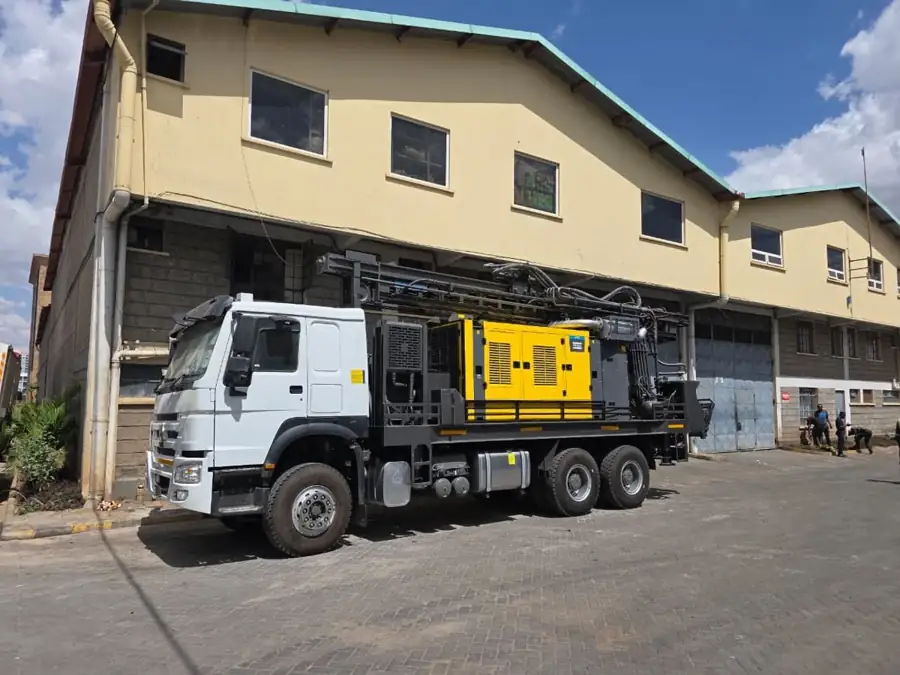
Two community projects from our team
This month we completed a community borehole in Samburu County. Before it, families depended on seasonal sources that fail in drought, and people and livestock shared the same water.
In Homa Bay County, we are building a borehole for a community welfare group near Kosele, with a solar pump, an elevated steel tank tower and a water kiosk. Read more in our Homa Bay borehole guide.
Step 4: run it as a water service
- Charge a small, fair price. Most communities charge a few shillings per 20 litre jerrican. It keeps the water flowing and is often far cheaper than vendors.
- Keep the money separate. Use a group bank or mobile money account with two signatories, and share a simple monthly report.
- Pay an attendant. One trusted person opens the kiosk, keeps it clean and records sales.
- Build a repair fund. Pumps, controllers and pipes all need parts in time. Saving every month avoids a crisis.
- Book a yearly check. Our borehole maintenance checklist lists what to inspect.
- Get the permit. WRA requires a permit for boreholes, renewed every five years. See borehole permits in Kenya.
Mistakes that make community boreholes fail
- No survey. Drilling where someone "feels" the water is the fastest way to a dry hole.
- No money for repairs. The most common reason a working borehole stops serving people.
- Pump too big for the borehole. Pumping more than the safe yield drops the water level and damages the pump. See borehole pump sizing.
- Unclear ownership. When nobody owns the borehole, nobody fixes it.
- Skipping the water test. Water that looks clean can still carry fluoride, salt or bacteria.
More on why boreholes stop working: why many Kenyan boreholes fail within 5 years.
Planning a borehole in your community?
WhatsApp us your location (village and sub county). We will tell you the expected depth and a cost range for your area. Drilling across Kenya since 2010.
WhatsApp 0727 666 444Call 0797 000 555Frequently Asked Questions
How much does a community borehole cost in Kenya?
It depends on depth and what you build around it. With Bonvic, drilling costs KES 6,500 to 7,200 per metre including casing, gravel pack, test pumping and a water analysis, plus the survey and permits. The pump, tank, tower and kiosk are quoted after test pumping.
Who owns a community borehole?
Usually a registered group such as a welfare association, church or water users committee, which holds the land agreement, the WRA permit and the bank account.
How do communities pay for borehole repairs?
Most charge a small amount per jerrican at a water kiosk, pay an attendant from it and save the rest in a separate repair fund.
Can CDF or the county fund a community borehole?
They can. Constituency and ward development funds and some county water programmes support community water projects. Approach them with a survey report, a budget and a management plan.
How many people can one borehole serve?
It depends on the safe yield from test pumping. A borehole giving 2 cubic metres an hour for 10 hours supplies about 1,000 jerricans a day, enough for a few hundred households.
The Bonvic team. WhatsApp 0727 666 444 or call 0797 000 555.