- The Kenyan and WHO limit for fluoride in drinking water is 1.5 mg/L.
- High fluoride is most common in the Rift Valley, especially parts of Nakuru, Baringo and Kajiado, and it also shows up in parts of Nairobi and nearby counties.
- Above 1.5 mg/L, children can develop brown, mottled teeth. Much higher levels over many years can affect bones and joints.
- You cannot see, smell or taste fluoride. A lab test on every new borehole is the only way to know, and the fix is a filter on the drinking water tap.
Brown stains on children’s teeth are a familiar sight in parts of the Rift Valley. In most cases the cause is fluoride in the water the family drinks every day.
Fluoride comes from the volcanic rocks that hold much of Kenya’s groundwater. This guide explains where it is common, what the limits mean, how to test and how to treat borehole water that is too high.
Fluoride risk checker
Fluoride risk checker
Pick your county. If you already have a lab result, enter it too and we will tell you what it means.
What fluoride does to your health
A small amount of fluoride protects teeth. The problem starts when drinking water carries more than the body needs, day after day.
| Fluoride level | What it means |
|---|---|
| Up to 1.5 mg/L | Within the Kenyan and WHO limit |
| 1.5 to 3 mg/L | Risk of dental fluorosis: white spots, then brown and mottled teeth, mainly in children whose teeth are still forming |
| Over 3 to 4 mg/L | Higher risk of skeletal fluorosis over many years: stiff joints, joint pain and bone changes |
| Very high levels | Serious bone and joint damage with long exposure |
Children under eight are most at risk for teeth, because their adult teeth are forming. Adults who drink high fluoride water for many years are most at risk for bones and joints.
Sources: WHO guidelines for drinking water quality; Kenya standard KS EAS 12 for potable water; Think Global Health, Kenya's fluoride problem.
Where fluoride is high in Kenya
High fluoride follows the Rift Valley and its volcanic rocks. Research and county reports point to these areas most often.
- Nakuru County: Naivasha, Gilgil, Elementaita and around Lake Nakuru are well known for high fluoride.
- Baringo County: many boreholes test well above the limit.
- Kajiado County: high readings are common in parts of the county.
- Nairobi and neighbours: some boreholes in Nairobi, Kiambu, Machakos and Narok test high while others nearby are fine.
Fluoride can change a lot over short distances and between depths. Two boreholes on neighbouring plots can give very different results, which is why every borehole needs its own test.
How to test for fluoride
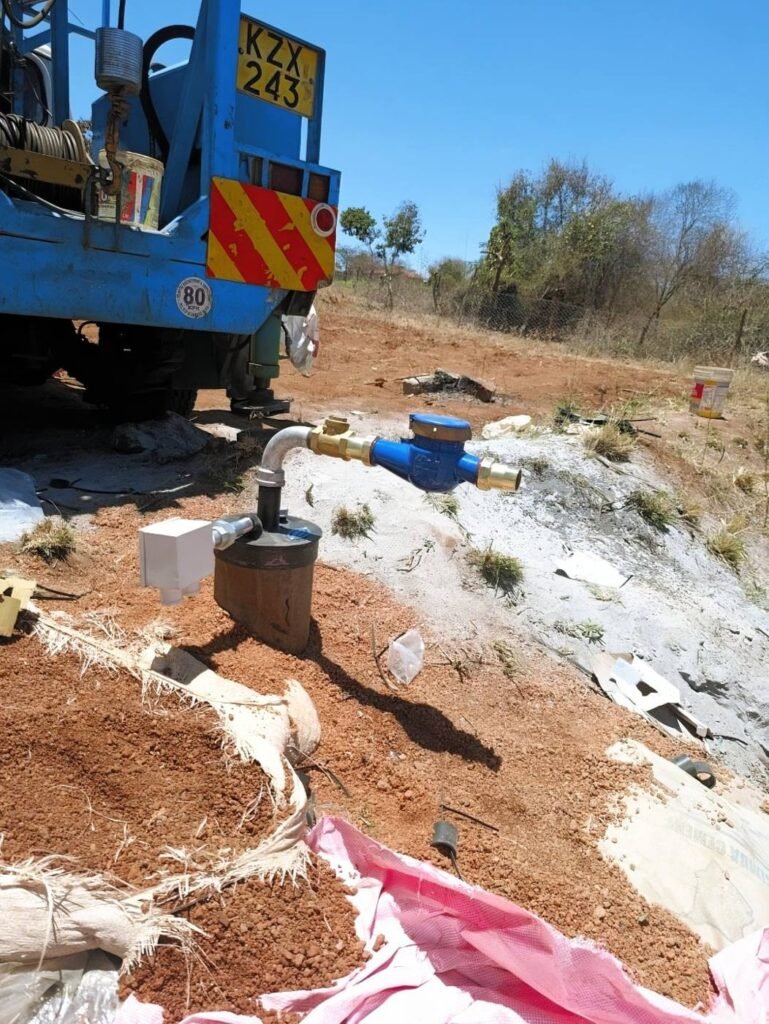
Take a sample in a clean bottle from the borehole outlet, before any tank or filter. Take it near the end of test pumping or after the pump has run for a while, so the water comes from the aquifer and not the pipe.
Ask a certified lab for a full potable water analysis that includes fluoride, salinity, iron and bacteria. Our guide to borehole water testing labs in Kenya lists where to go and what to ask for.
Bonvic takes a lab sample from every new borehole and gives the owner a water quality report. If fluoride is high, we explain your options before the pump goes in.
How to remove fluoride from borehole water
Boiling does not remove fluoride, and most ordinary sand or carbon filters do not either. These methods do work.
Reverse osmosis (RO) at the kitchen tap
An RO unit removes most fluoride along with salt and many other minerals. It is the most common choice for homes, and you only need it on the tap used for drinking and cooking.
Bone char and activated alumina filters
These filters use media that hold on to fluoride. They are used in homes, schools and community water points, but the media must be replaced or regenerated on schedule to keep working.
Blending and rainwater
Mixing borehole water with rainwater lowers the fluoride level. Many families in high fluoride areas use rainwater for drinking and borehole water for everything else.
Use borehole water where fluoride does not matter
Fluoride is only a problem when you drink it. High fluoride water is fine for washing, toilets, construction and most irrigation.
| Method | Best for | Notes |
|---|---|---|
| Reverse osmosis | Homes, offices | Also removes salt; needs filter changes |
| Bone char filter | Homes, schools | Media must be replaced on time |
| Activated alumina | Schools, institutions | Works best with pH adjustment |
| Rainwater blending | Homes with roof catchment | Lowest running cost |
Bonvic supplies and fits the filter that matches your lab result, from a single kitchen RO unit to systems for schools and community kiosks.
Planning a new borehole in a high fluoride area
A hydrogeological survey studies the rocks and nearby boreholes before drilling. In some areas, it can point to depths or aquifers with better water quality.
Budget for a lab test and a drinking water filter from the start, not as an afterthought. The cost of a filter is small next to the cost of a family's health.
BLACK NOVEMBER 2026 OFFER
Hydrogeological survey KES 40,000. Drilling KES 6,500 per metre with PVC casing or KES 6,700 per metre with steel casing, for jobs booked by 30 November 2026.
See the offer and estimate your total or call 0727 666 444.
Worried about fluoride in your water?
Send us your location and your lab result if you have one. The Bonvic team will tell you what it means and which filter fits.
WhatsApp 0727 666 444Call 0797 000 555Drilling in Makueni? See our Makueni borehole guide for what local water studies found on salinity and fluoride.
Fluoride has also been found above limits at some boreholes in Mbeere South. See our Embu County borehole guide.
Got your lab report back? Enter the numbers in our water quality test results interpreter to see which results are above the safe limit and what treatment fits.
Frequently asked questions
What is the safe level of fluoride in drinking water in Kenya?
The Kenyan standard and the WHO guideline both set the maximum at 1.5 mg/L for drinking water.
Which areas in Kenya have high fluoride?
High fluoride is most common in the Rift Valley, especially parts of Nakuru, Baringo and Kajiado. Some boreholes in Nairobi, Kiambu, Machakos and Narok also test high.
Does boiling water remove fluoride?
No. Boiling does not remove fluoride and can make it slightly more concentrated as water evaporates.
What causes brown teeth in Kenya?
In many areas, brown and mottled teeth are caused by dental fluorosis from drinking water with too much fluoride while the teeth were forming.
How do I remove fluoride from borehole water?
Use a reverse osmosis, bone char or activated alumina filter on the drinking water tap, or mix borehole water with rainwater. Ordinary sand and carbon filters do not remove fluoride.
The Bonvic team. WhatsApp 0727 666 444 or call 0797 000 555.