Quick answer: most boreholes in Murang’a County are drilled to 60 to 180 metres. With Bonvic, air drilling costs KES 6,500 to 7,200 per metre including casing, gravel packing, test pumping and a water analysis. Add about KES 135,000 for the survey and permits, so a 120 metre borehole comes to roughly KES 915,000 to 999,000 before the pump.
BLACK NOVEMBER 2026 OFFER
Hydrogeological survey KES 40,000. Drilling KES 6,500 per metre with PVC casing or KES 6,700 per metre with steel casing, for jobs booked by 30 November 2026.
WhatsApp for a quoteCall 0727 666444See the offer and estimate your total
This guide covers what to expect in each part of the county, the full cost, permits and how a Murang’a project runs from survey to first water.
Borehole cost estimator for Murang’a
Most Murang’a boreholes fall between 60 and 180 metres. Move the slider to your expected depth.
Based on Bonvic air drilling rates of KES 6,500 to 7,200 per metre from 2026 client quotes. Your exact depth and price are confirmed in writing after the survey.
Why Boreholes Make Sense in Murang’a
Murang’a is one of Kenya’s water towers. Its rivers and the Ndakaini Dam feed most of Nairobi’s supply, yet many homes in the county still wait for reliable piped water.
In 2023 the county said only about 66% of households were connected to clean water, and it launched a programme of 20 public boreholes in the driest wards, as reported by The Star. Residents of Kahumbu ward in Kigumo were walking more than six kilometres to the river.
For a home, a school or a farm, a private borehole removes that wait. Once it runs on solar, the water costs almost nothing each month. Our borehole vs county water cost comparison shows how quickly that adds up.
Geology and Borehole Depth in Murang’a
Murang’a rises from the dry plains near Makuyu and Kambiti in the east to the Aberdare forest in the west. Rainfall, rock and depth all change along that slope.
Most of the county sits on volcanic rock. Water is stored in fractures and weathered zones rather than in loose sand, so finding a good fracture matters more than simply drilling deeper. In places the rock is hard, which slows drilling.
Our borehole depth by county guide puts Murang’a at 60 to 180 metres. The upper, wetter areas near the Aberdares often strike water toward the shallower end. The drier lower areas usually need a careful survey and a deeper hole.
What to Expect by Sub County
Murang’a had 1,056,640 people at the 2019 census, spread across eight sub counties (KNBS figures via City Population). This table gives a general picture. Your survey decides the real depth and drilling point.
| Sub county | Population (2019) | What to expect |
|---|---|---|
| Kangema | 80,447 | High, wet ground near the Aberdares. Steep plots, so plan rig access early. |
| Mathioya | 92,814 | Upper zone with good rainfall. Steep ridges and valleys change depth over short distances. |
| Kahuro | 88,193 | Mid altitude farms. Fracture zones decide yield, so the survey point matters. |
| Kigumo | 136,921 | Upper Kigumo is well watered; the middle zone relies on rivers and has gaps in piped supply. |
| Murang’a East | 110,311 | Around Murang’a town. Homes, schools and businesses add boreholes as backup to the utility. |
| Kandara | 175,098 | Farming and growing settlements toward Thika. Mixed volcanic ground. |
| Gatanga | 187,989 | Coffee and tea country with fast growing homes near the Thika border. |
| Murang’a South | 184,824 | Drier lower areas such as Makuyu and Kambiti. Expect the deeper end of the range and survey carefully. |
Borehole Drilling Cost in Murang’a (2026)
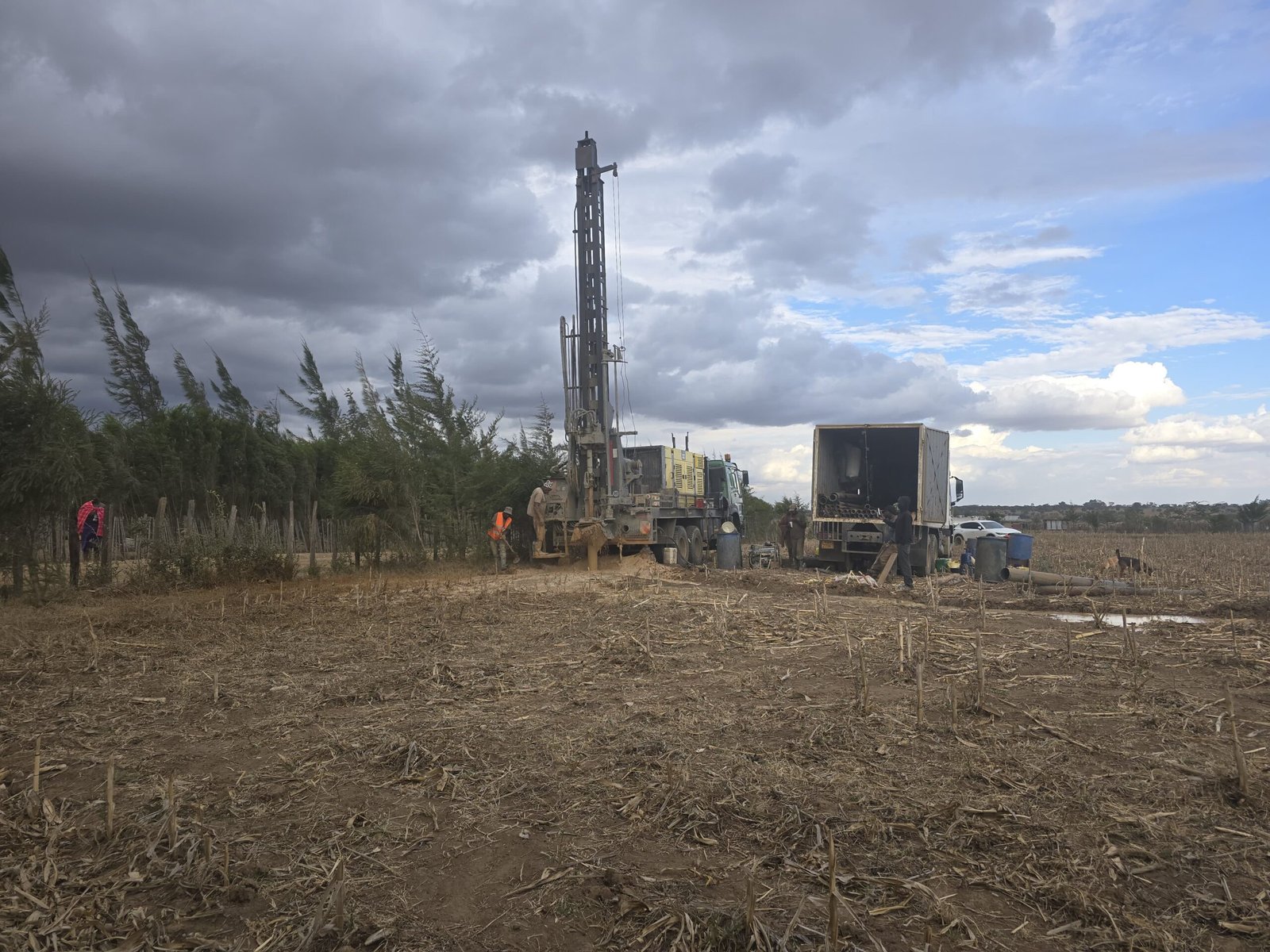
You pay per metre, so depth is the biggest factor. These figures use our 2026 air drilling rates, which already include casing, gravel packing, well development, test pumping and a water quality analysis.
| Depth | Drilling | Survey and permits | Total before pump |
|---|---|---|---|
| 80 m | KES 520,000 to KES 576,000 | KES 135,000 | KES 655,000 to KES 711,000 |
| 120 m | KES 780,000 to KES 864,000 | KES 135,000 | KES 915,000 to KES 999,000 |
| 150 m | KES 975,000 to KES 1,080,000 | KES 135,000 | KES 1,110,000 to KES 1,215,000 |
| 180 m | KES 1,170,000 to KES 1,296,000 | KES 135,000 | KES 1,305,000 to KES 1,431,000 |
The pump and solar system are quoted after test pumping, because their size depends on your yield and how much water you need. For the full breakdown, see how much borehole drilling costs in Kenya.
If the budget is tight, you can pay in stages. Read how to pay for a borehole in Kenya.
Permits You Need
Every borehole in Murang’a needs three approvals: the Water Resources Authority, NEMA and the county. We handle all of them for about KES 85,000, and approvals take about one month.
Drilling without a permit risks fines and a sealed borehole. Our guide to borehole permits in Kenya explains each step.
How a Murang’a Borehole Project Runs
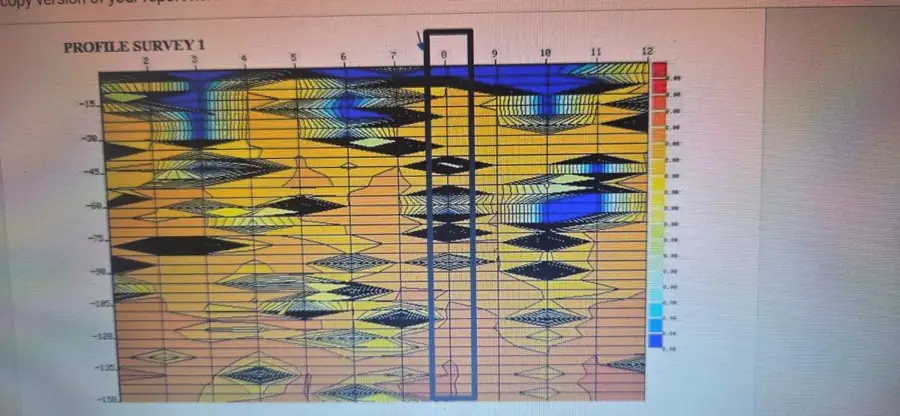
- Hydrogeological survey (KES 50,000). A hydrogeologist tests the ground and marks the best drilling point and expected depth.
- Permits. We apply to WRA, NEMA and the county using the survey report. This takes about one month.
- Site access. We confirm the route and level a pad for the rig, which matters on steep plots.
- Drilling. A typical domestic borehole takes about three days on site.
- Casing, gravel pack and development. The hole is lined, packed and flushed until the water runs clear.
- Test pumping and water analysis. These give your safe yield and tell you what treatment, if any, the water needs.
- Pump and solar installation. Sized from the test pumping results, not guessed.
Common Challenges in Murang’a
- Steep access. Ridges in Kangema, Mathioya and upper Kigumo need a planned route for the rig and compressor. See borehole drilling in hilly terrain.
- Hard volcanic rock. Drilling is slower in hard sections, and yield depends on hitting water bearing fractures.
- Dry lower zones. Around Makuyu and Kambiti, skipping the survey is the most expensive mistake you can make.
- Seasonal water levels. Levels drop in the dry months, so the pump must be set below the dry season level. Read borehole yield during drought.
Boreholes for Farms, Schools and Homes
Murang’a is farming country, from coffee and tea to avocado and dairy. A borehole lets you water through the dry months instead of waiting for rain.
To see how much land your borehole can water, try our borehole irrigation calculator. Schools, churches and estates can share one borehole; see shared boreholes for estates.
Planning a borehole in Murang’a?
WhatsApp us your location (village and sub county). We will tell you the expected depth and a cost range for your area. Drilling across Kenya since 2010.
WhatsApp 0727 666 444Call usRelated: New county guides: borehole drilling in Kitui and borehole drilling in Kisumu, each with a cost estimator.
Also in the region: our Kirinyaga borehole guide covers Kerugoya, Kutus and Mwea.
Choosing a driller? Use our eight checks to find the best borehole drilling company in Kenya for your project, with 2026 prices and red flags to avoid.
Frequently Asked Questions
How deep are boreholes in Murang’a?
Most boreholes in Murang’a County are drilled to between 60 and 180 metres. The drier lower areas and sites on hard volcanic rock tend to need the deeper end of that range. A hydrogeological survey gives the depth for your plot.
How much does borehole drilling cost in Murang’a?
Air drilling costs KES 6,500 to 7,200 per metre with Bonvic, including casing, gravel packing, development, test pumping and a water analysis. A 120 metre borehole costs about KES 915,000 to 999,000 including the survey and permits, before the pump.
Do I need a permit to drill a borehole in Murang’a?
Yes. Every borehole needs approval from the Water Resources Authority, an environmental clearance from NEMA and county approval. We handle the paperwork for about KES 85,000 and it takes about one month.
Can I drill a borehole on a steep plot in Murang’a?
Usually, yes. The rig needs a safe access route and a level pad to work from. We check access during the survey and plan the route before mobilising.
Is borehole water in Murang’a good for irrigation?
In most cases yes, but test it first. Every Bonvic borehole includes a water quality analysis, which tells you whether the water suits drip lines and your crops.