Quick answer: most boreholes in Kitui County are drilled to 60 to 200 metres. With Bonvic, air drilling costs KES 6,500 to 7,200 per metre including casing, gravel packing, test pumping and a water analysis. Add about KES 135,000 for the survey and permits, so a 150 metre borehole comes to roughly KES 1,110,000 to 1,215,000 before the pump.
BLACK NOVEMBER 2026 OFFER
Hydrogeological survey KES 40,000. Drilling KES 6,500 per metre with PVC casing or KES 6,700 per metre with steel casing, for jobs booked by 30 November 2026.
WhatsApp for a quoteCall 0727 666444See the offer and estimate your total
Kitui is one of the places where a borehole changes daily life the most, and also one of the places where it pays to plan carefully. This guide covers the rock, the water quality, the costs and how a Kitui project runs.
Borehole cost estimator for Kitui
Most Kitui boreholes fall between 60 and 200 metres, and harder sites go deeper. Move the slider to your expected depth and pick what the water is for.
Based on Bonvic air drilling rates of KES 6,500 to 7,200 per metre from 2026 client quotes. Your exact depth and price are confirmed in writing after the survey.
Why Water Is Hard to Find in Kitui
Kitui covers 30,497 square kilometres and had 1,136,187 people at the 2019 census (Commission on Revenue Allocation county fact sheet). It is a big, dry county, and water is the daily struggle for many families.
Only 38.5% of households had safe drinking water in 2019, which ranked Kitui 42nd of 47 counties. The county's climate risk profile says the average walk to a water point is about 7 km, and in dry spells most households spend 30 minutes or more fetching water (Kitui County Climate Risk Profile).
A private or community borehole cuts that walk to zero. That is why schools, churches, farms and families across the county keep investing in them.
Rainfall: Two Short Seasons
Kitui gets between 400 and 1,000 mm of rain a year, about 750 mm on average, and the eastern parts get less than 500 mm. The long rains from March to May are erratic. The short rains from October to December are more reliable, and June to September is dry.
Low rainfall means slow recharge. Groundwater here has to be found and used carefully, which is why we pay so much attention to the survey and the test pumping.
Geology: Hard Rock and Fractures
Most of Kitui sits on the Basement System, old and very hard gneisses, migmatites, quartzites and crystalline limestones (Geological Survey of Kenya Report 30). The rock itself holds almost no water. Water sits in cracks, joints and weathered zones.
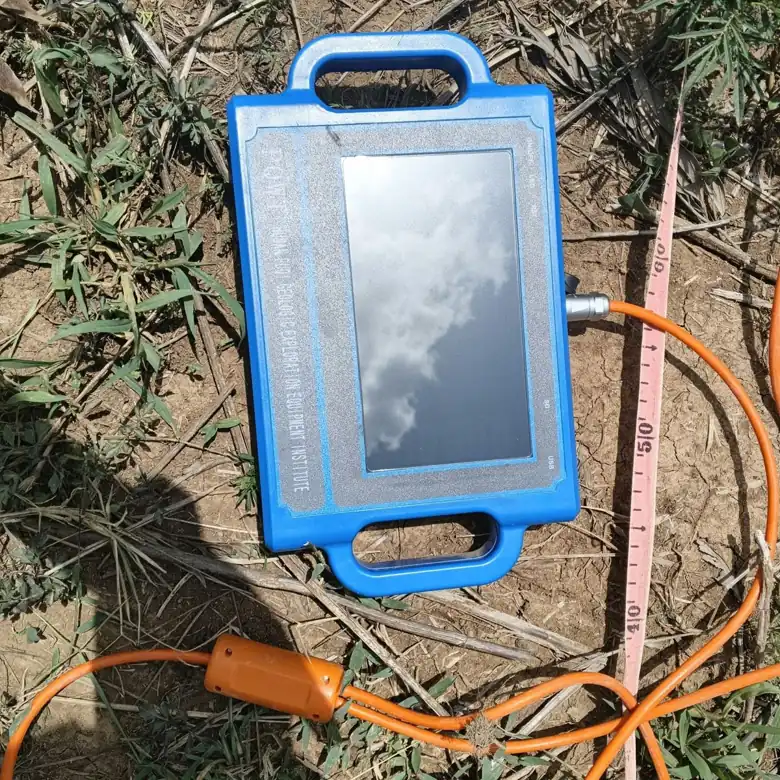
That changes how you drill. In Basement rock you are not looking for a layer of sand, you are looking for a fracture. A survey point a few metres off can be the difference between a good borehole and a weak one. Our guide can water be found in rocky areas explains how this works.
Hard rock is also why we use air drilling here. A down the hole hammer cuts through gneiss far faster than mud rotary. See air vs mud drilling in Kenya.
The Yatta Plateau is different
Along the Yatta Plateau, water comes from old phonolite lava flows rather than Basement rock. A 2017 study of six boreholes there found depths from 133 to 230 metres (Mwamati, Kitheka and Njuru, 2017).
Boreholes in the north of that study area were being pumped at only about 2.5 to 2.8 cubic metres an hour. Plan your water use around a tested yield, not a guess.
Water Quality: Test Before You Use It
Salty groundwater is common in much of Kitui, and in some areas people have abandoned shallow wells because of it, according to a 2021 review of groundwater quality in the region (Gevera et al.).
Fluoride is the other one to watch. In the Yatta Plateau study, two of six boreholes went above the 1.5 mg/L drinking water limit, with a high of 2.4 mg/L, and three went above the 1,000 mg/L limit for dissolved solids at some point.
This does not mean Kitui water is bad. It means you must test it. Every Bonvic borehole includes a water quality analysis, and our guide to borehole water salinity in Kenya explains what the survey can and cannot tell you in advance.
| What to test | Why it matters in Kitui |
|---|---|
| Salinity (EC and TDS) | Salty water is common in parts of the county and affects drinking and crops |
| Fluoride | Some studied boreholes exceeded the 1.5 mg/L limit |
| Hardness | Hard water scales pipes, tanks and solar pumps |
| Bacteria | Needed for any drinking water supply |
For labs and prices, see borehole water testing in Kenya.
Kitui Sub Counties at a Glance
Kitui has 18 sub counties in the 2019 census (KNBS figures via City Population). Ground conditions can change within a few hundred metres, so treat any area as a starting point and let the survey decide.
| Sub county | Population (2019) |
|---|---|
| Mutomo | 113,356 |
| Mwingi Central | 108,713 |
| Kitui Central | 105,991 |
| Mwingi East | 85,139 |
| Ikutha | 82,964 |
| Migwani | 79,255 |
| Kyuso | 76,867 |
| Kitui West | 70,871 |
| Lower Yatta | 63,329 |
| Mutitu | 55,287 |
| Matinyani | 47,811 |
| Katulani | 47,108 |
| Nzambani | 46,788 |
| Kisasi | 46,142 |
| Tseikuru | 40,871 |
| Mumoni | 29,344 |
| Mutitu North | 21,215 |
| Thagicu | 15,136 |
Borehole Drilling Cost in Kitui (2026)
You pay per metre, so depth is the biggest factor. These figures use our 2026 air drilling rates, which include casing, gravel packing, well development, test pumping and a water quality analysis.
| Depth | Drilling | Survey and permits | Total before pump |
|---|---|---|---|
| 100 m | KES 650,000 to KES 720,000 | KES 135,000 | KES 785,000 to KES 855,000 |
| 150 m | KES 975,000 to KES 1,080,000 | KES 135,000 | KES 1,110,000 to KES 1,215,000 |
| 180 m | KES 1,170,000 to KES 1,296,000 | KES 135,000 | KES 1,305,000 to KES 1,431,000 |
| 200 m | KES 1,300,000 to KES 1,440,000 | KES 135,000 | KES 1,435,000 to KES 1,575,000 |
Transport to remote parts of the county is quoted with your job. The pump and solar system are sized after test pumping. For the full breakdown see how much borehole drilling costs in Kenya, and to spread the cost read how to pay for a borehole in Kenya.
Permits for a Kitui Borehole
Every borehole needs a hydrogeological survey, a Water Resources Authority drilling permit, NEMA approval and county consent. We handle the paperwork for about KES 85,000, and approvals take about one month.
Kitui drains toward both the Tana and Athi river systems, so the WRA office that handles your file depends on where your plot sits. We confirm this during the survey. Read borehole permits in Kenya for each step.
How a Kitui Borehole Project Runs
- Hydrogeological survey (KES 50,000). The most important step in Kitui. The hydrogeologist looks for water bearing fractures and marks the best point.
- Permits. WRA, NEMA and county approvals, about one month.
- Mobilisation. We plan the route for the rig and compressor, which matters on remote murram roads.
- Air drilling. A down the hole hammer through the hard rock.
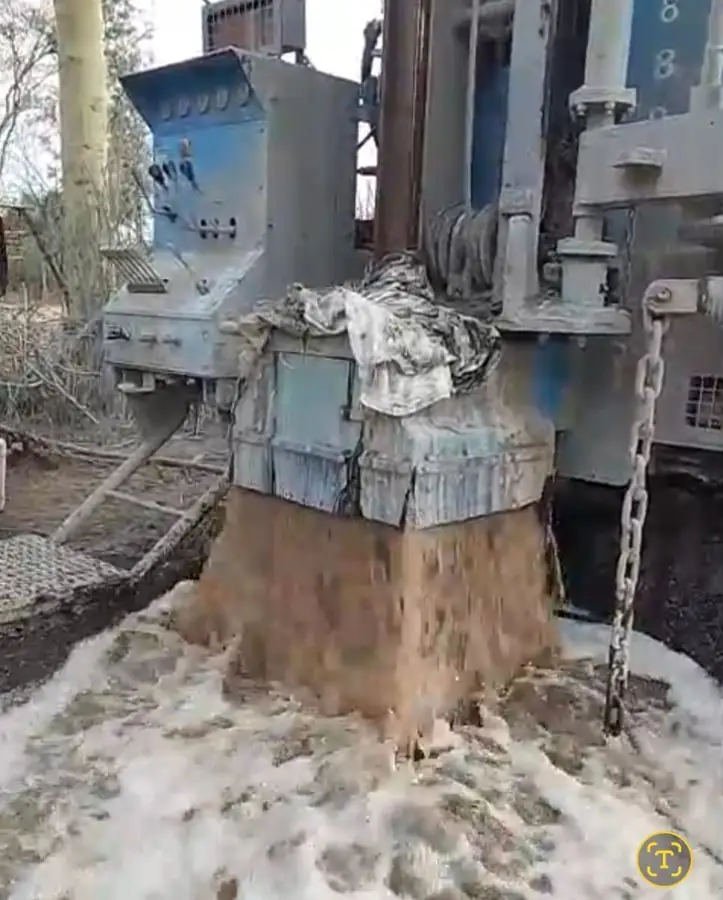
- Casing, gravel pack and development. The hole is lined and flushed until the water runs clear.
- Test pumping and water analysis. Your safe yield and water quality, in writing.
- Pump and solar. Sized from the test, so you never over pump a weak borehole.
Making a Kitui Borehole Last
- Respect the tested yield. Over pumping a fractured rock borehole can drop the water level fast. Read borehole yield during drought.
- Store water. A tank on a stand lets a low yield borehole fill slowly all day. See why your borehole needs a water tower.
- Use drip irrigation. It gets the most crop from limited water. Try our borehole irrigation calculator.
- Share it. Neighbours, schools and churches can split the cost of one good borehole. See shared boreholes.
What the County Is Doing
Kitui is investing heavily in water. In July 2025, Governor Malombe reported 347 sand dams, 60 earth dams and 55 boreholes across the county (Citizen Digital). A World Bank backed programme added 20 sand dams in 20 wards in 2024 (The Star).
Public projects help whole villages, but they cannot reach every homestead or farm. A private borehole gives you water on your own plot, on your own schedule.
Planning a borehole in Kitui?
WhatsApp us your location (village and sub county). We will tell you the expected depth and a cost range for your area. Drilling across Kenya since 2010.
WhatsApp 0727 666 444Call 0797 000 555Neighbouring county: read our Makueni borehole drilling guide, with a cost estimator by sub county.
Near the Mbeere border? Our Embu borehole guide covers depth, fluoride and farm water needs in Mbeere.
Choosing a driller? Use our eight checks to find the best borehole drilling company in Kenya for your project, with 2026 prices and red flags to avoid.
Frequently Asked Questions
How deep are boreholes in Kitui County?
Most boreholes in Kitui are drilled to 60 to 200 metres. Studied boreholes on the Yatta Plateau ranged from 133 to 230 metres. Your survey gives the expected depth for your plot.
How much does borehole drilling cost in Kitui?
With Bonvic, air drilling costs KES 6,500 to 7,200 per metre, including casing, gravel packing, test pumping and a water analysis. Add about KES 135,000 for the survey and permits. A 150 metre borehole comes to roughly KES 1,110,000 to 1,215,000 before the pump.
Is borehole water in Kitui salty?
Some of it is. Salty groundwater is common in parts of Kitui, and studies on the Yatta Plateau found fluoride above the 1.5 mg/L limit in some boreholes. Every Bonvic borehole includes a water analysis so you know what treatment, if any, you need.
Why is the hydrogeological survey so important in Kitui?
Most of Kitui sits on very old, hard Basement rock where water is found only in fractures. A good survey finds those fractures. Drilling without one is the most common reason boreholes come up dry or weak.
Can a borehole in Kitui run on solar?
Yes. Kitui gets strong sunshine for most of the year, so solar pumping works well. The pump and panels are sized from your test pumping results.